Link-in-Bio Tools vs URL Shorteners: What's the Difference? (2026)
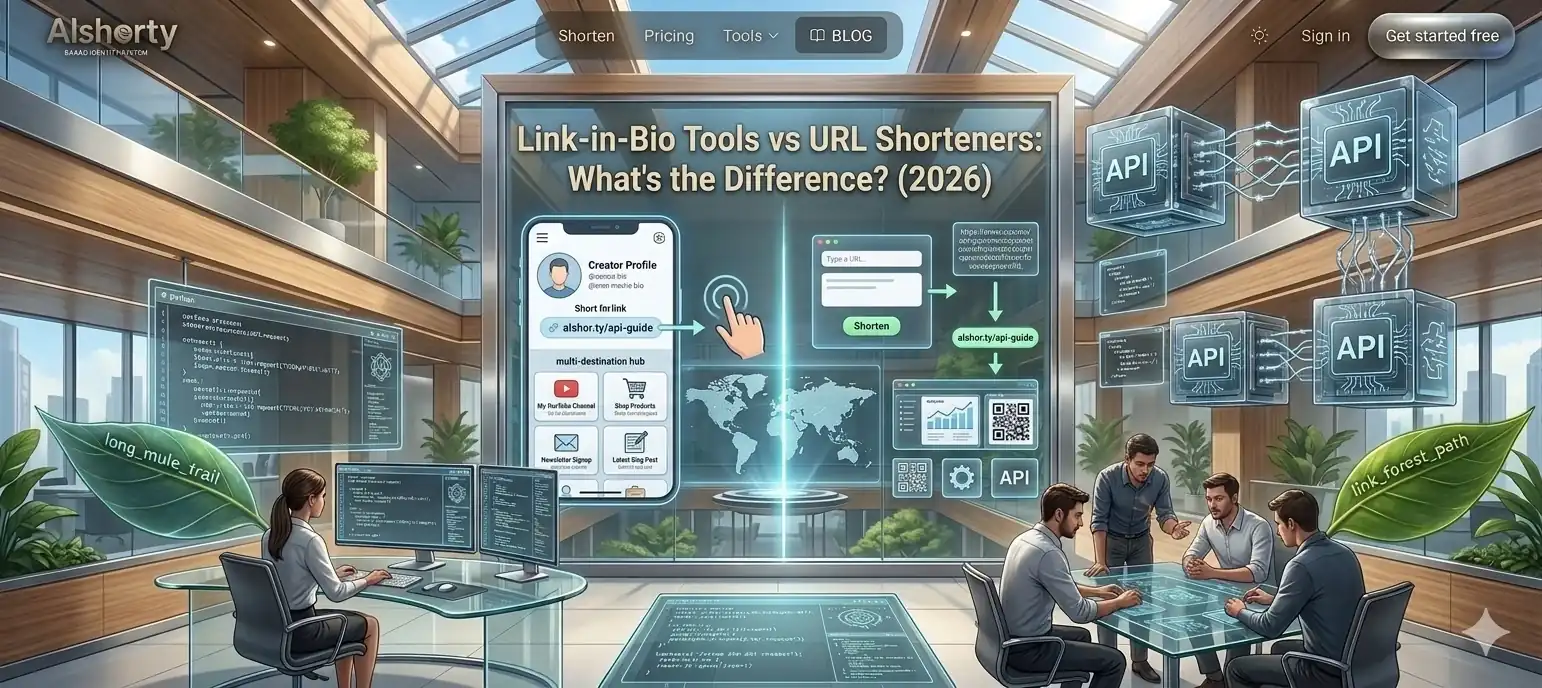
People often treat Link in Bio tools and URL shorteners like completely separate categories. In reality, modern creator platforms increasingly combine both. Here’s how they differ, where they overlap, and why creators now use both together.
Muqira
May 2026 · Updated regularly · 9 min read
Creators accidentally turned one profile link into an entire industry
Instagram probably didn't expect the "one bio link" limitation to create an ecosystem worth millions.
But here we are.
Now creators manage:
- YouTube channels
- TikTok profiles
- newsletters
- affiliate products
- stores
- courses
- Spotify pages
all while platforms still mostly give them a single clickable bio link.
That's why two categories exploded in popularity:
- Link-in-Bio tools
- URL shorteners
At first glance they seem similar.
But they actually solve different problems.
What Link-in-Bio tools are designed to do
Tools like Linktree, Beacons, and similar platforms focus on one main idea:
Create a central creator hub.
Instead of sending followers toward one destination, you create a page containing multiple options.
Usually something like:
- latest YouTube video
- Instagram profile
- newsletter signup
- affiliate products
- Spotify link
- storefront
The audience lands on the page and chooses where to go next.
That's the core workflow.
What URL shorteners are optimized for instead
Shorteners solve a different issue entirely.
They're mainly about:
- cleaner sharing
- branding
- tracking
- campaign management
Instead of:
https://example.com/products/summer-launch?utm_source=instagram
you create:
alshorty.com/summer
Cleaner.
More memorable.
Easier to track.
Especially useful for:
- campaigns
- QR codes
- podcasts
- emails
- offline marketing
The biggest practical difference
A Link in Bio page offers:
multiple destinations simultaneously.
A short link usually offers:
one focused destination.
That sounds small, but it changes user behavior quite a bit.
When Link in Bio pages work best
Bio pages are especially useful when creators constantly juggle multiple priorities.
For example:
- new video
- merch store
- sponsorship links
- newsletter growth
- music streaming
Trying to rotate one direct link constantly becomes exhausting.
A central hub solves that problem.
When short links work better
Shorteners shine when the goal is focus.
Examples:
- one product launch
- one signup page
- one event registration
- one campaign destination
In those situations, sending visitors through an additional menu page can actually reduce conversions.
Sometimes simpler wins.
Modern creators increasingly combine both
This is the interesting part.
The categories are starting to overlap heavily.
Creators now commonly use:
- a Link in Bio page as the central hub
- short links for specific campaigns
- QR codes for offline sharing
- analytics across everything
Instead of choosing one tool category forever, workflows became more interconnected.
Analytics changed the conversation completely
Originally, Link in Bio tools were mostly static pages.
Now creators expect analytics everywhere.
They want to know:
- which links get clicked
- what countries traffic comes from
- what devices people use
- which platforms convert best
That's one reason shortening platforms and bio platforms started merging feature sets.
QR codes quietly connect both worlds
This part gets overlooked a lot.
Modern QR systems almost always rely on short links underneath.
And creators increasingly use QR codes to open:
- Link in Bio pages
- creator hubs
- event pages
- newsletter signups
Especially for:
- business cards
- posters
- meetups
- merch packaging
That overlap between QR + short links + bio pages is becoming very common now.
Why creators are moving toward all-in-one ecosystems
Managing separate tools gets annoying surprisingly fast.
One platform for:
- bio pages
- another for shortening
- another for QR codes
- another for analytics
creates fragmented workflows.
That's why integrated creator ecosystems are growing quickly.
Especially platforms combining:
- short links
- Link in Bio pages
- analytics
- QR generation
- custom branding
inside one dashboard.
Alshorty combines both approaches intentionally
This is actually one of the biggest differences in positioning.
Instead of treating:
- short links
- QR codes
- Link in Bio pages
- analytics
as separate products, Alshorty connects them together.
Which means creators can:
- create branded short links
- track campaigns
- generate QR codes
- build creator bio pages
without jumping across multiple tools constantly.
Some creators are overusing bio pages now
This is worth mentioning.
Not every situation needs a Link in Bio page.
If you're running a focused ad campaign toward one clear action, an extra intermediary page can sometimes reduce conversions.
That's where short links still outperform.
The best creators usually know when to simplify.
Link in Bio pages are excellent for discovery. Short links are excellent for focus. Smart creator workflows usually use both.
Which one should you actually use?
| Use Case | Best Option |
|---|---|
| Multiple creator destinations | Link in Bio page |
| Single focused campaign | Short link |
| Offline QR marketing | Both together |
| Podcast or spoken URLs | Short branded links |
| Creator ecosystems | Integrated workflow |
Build short links and Link in Bio pages together
Creator hubs · QR codes · Analytics · Branded links · Unified dashboards
Create your bio page →The categories are slowly merging anyway
Honestly, the distinction between:
- Link in Bio tools
- shorteners
- QR platforms
- creator hubs
is becoming blurrier every year.
Users increasingly expect all those workflows to connect naturally.
And the platforms adapting fastest to that shift are probably the ones most likely to win long term.
This guide is part of the Alshorty blog, where we cover URL shortening, Link-in-Bio pages, SmartPages, analytics, QR codes, and marketing strategies. Explore our free tools: UTM Builder, QR Generator, Link Checker, Link-in-Bio builder, and SmartPages builder.
Try Alshorty for free
Shorten URLs, track clicks, generate QR codes, and create a free Link-in-Bio page — no account required.