
Why Smart Pages Are Replacing Traditional Websites in 2026
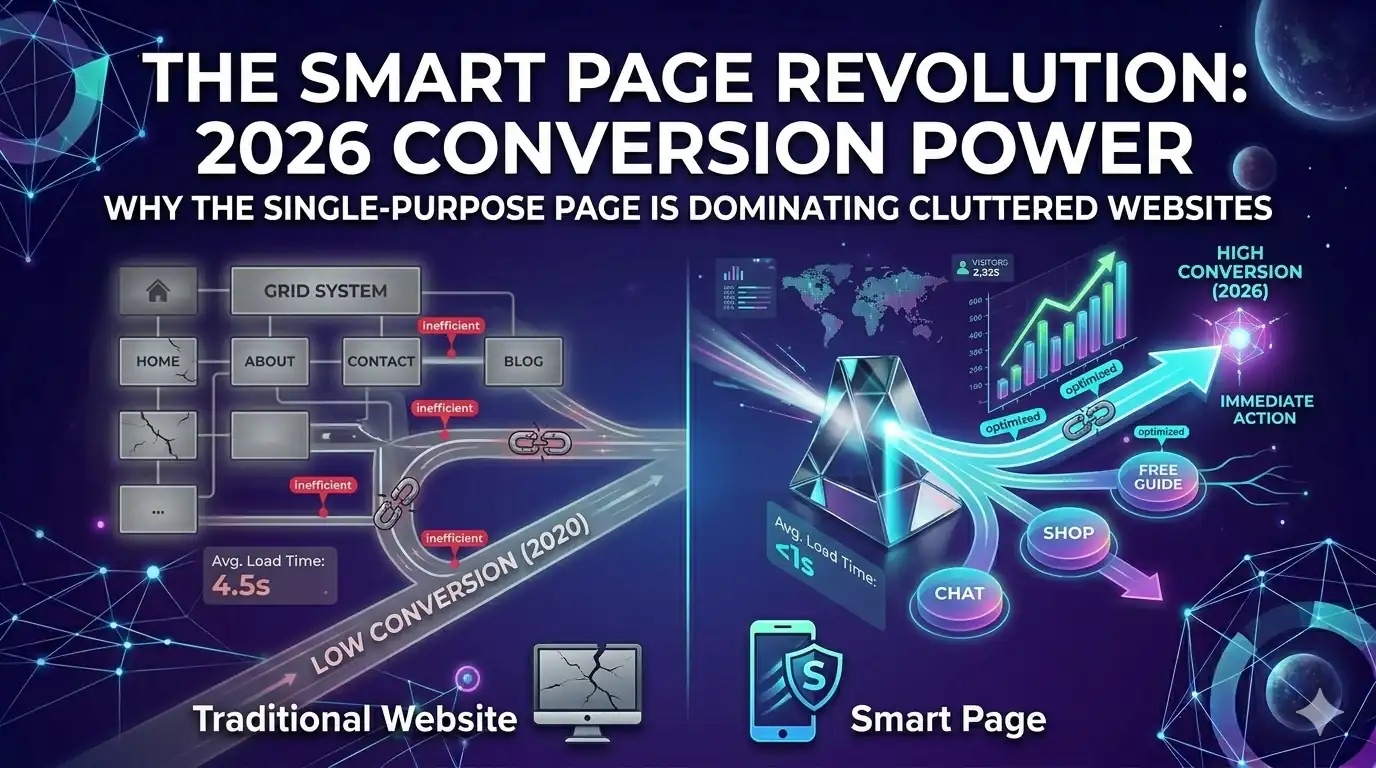
Traditional websites were built for a different internet era. In 2026, businesses and creators increasingly prefer Smart Pages — faster, mobile-first, conversion-focused pages designed for modern traffic.
Muqira
May 2026 · Updated regularly · 10 min read
The internet changed faster than websites did
For a long time, traditional websites made perfect sense.
You had:
- homepage
- about page
- services page
- contact page
- blog
- navigation menus everywhere
That structure worked well in the desktop-first internet era.
But internet behaviour changed dramatically.
Today, most traffic comes from:
- mobile devices
- TikTok
- YouTube
- ads
- direct campaign links
Users no longer want to explore complicated websites.
They want immediate information.
Fast loading.
Clear actions.
Simple navigation.
And that's exactly why Smart Pages are growing so quickly in 2026.
What is a Smart Page?
A Smart Page is a modern one-page website designed specifically for:
- mobile visitors
- campaign traffic
- high conversions
- fast publishing
Instead of forcing users through multiple pages and menus, Smart Pages focus on one goal:
getting visitors to take action quickly.
That action could be:
- buying a product
- booking a call
- joining a newsletter
- submitting a form
- clicking a CTA
- viewing an offer
Modern businesses increasingly prefer focused pages over complicated website structures.
Traditional websites are often too slow and bloated
One of the biggest problems with older website systems is complexity.
Especially platforms that evolved during the desktop internet era.
Many traditional websites now suffer from:
- slow loading speeds
- too many plugins
- heavy themes
- confusing navigation
- poor mobile optimization
And honestly?
Most visitors never even reach the important pages.
Modern users decide within seconds whether they stay or leave.
That's why simpler, conversion-focused experiences are winning.
Smart Pages are built for mobile-first traffic
This is the biggest shift happening right now.
Most traffic no longer starts from Google desktop searches.
It starts from:
- social media bios
- Instagram stories
- YouTube descriptions
- QR codes
- WhatsApp sharing
- mobile ads
That means pages need to:
- load instantly
- look clean on phones
- highlight CTAs immediately
- remove distractions
Traditional websites often fail here because they were designed around desktop navigation systems.
Smart Pages are designed around mobile behaviour first.
Modern businesses care more about conversions than page counts
Ten years ago, businesses wanted huge websites because it felt more professional.
Today?
Businesses care more about:
- lead generation
- campaign performance
- conversion rates
- analytics
- speed
Not how many pages exist.
A single focused Smart Page can often outperform a large traditional website.
Especially for:
- freelancers
- startups
- agencies
- creators
- small businesses
- product launches
Why Smart Pages convert better
Most Smart Pages follow a focused structure.
Instead of overwhelming users, they guide visitors through a clear flow.
Usually something like:
- headline
- value proposition
- features
- social proof
- CTA buttons
- forms
- FAQs
That structure removes friction.
And lower friction usually means higher conversions.
This is why modern landing-page builders exploded in popularity.
Smart Pages are easier to build and manage
Traditional websites often require:
- themes
- plugins
- hosting management
- updates
- technical maintenance
That becomes frustrating for smaller teams.
Especially non-technical users.
Smart Page builders simplify the process dramatically.
Modern users increasingly want:
- drag-and-drop editing
- visual customization
- instant publishing
- built-in analytics
- mobile optimization
without needing developers.
The rise of lightweight conversion-focused platforms
We're seeing a major industry trend right now.
Businesses are moving away from huge website systems and toward lightweight conversion platforms.
Because modern traffic behaves differently.
Campaign traffic needs:
- speed
- clarity
- focused messaging
- clear CTAs
not complicated navigation trees.
That's why one-page website builders and Smart Page platforms are growing rapidly.
What makes a good Smart Page builder?
The best Smart Page platforms now include:
- drag-and-drop blocks
- forms
- countdown timers
- analytics
- SEO settings
- custom branding
- mobile optimization
- CTA buttons
- embeds
All inside one lightweight workflow.
Modern users don't want complicated site management anymore.
They want publishing speed.
Why SmartPages by Alshorty fits the modern internet better
SmartPages by Alshorty focuses heavily on modern conversion-focused workflows.
Instead of building bloated websites, users can create:
- landing pages
- product pages
- creator pages
- lead generation pages
- campaign pages
- mobile-first business pages
inside a lightweight visual builder.
Features include:
- drag-and-drop blocks
- countdown timers
- forms
- analytics
- custom branding
- SEO controls
- tracking pixels
- embeds
without the complexity of traditional website systems.
Modern users don't need more pages. They need clearer pages that convert faster.
Build your first SmartPage free
Landing pages · Business pages · Forms · Analytics · Mobile-first design
Try SmartPages →The future of websites is smaller, faster and smarter
Traditional websites are not disappearing completely.
Large companies will still need complex systems.
But for modern creators, startups and businesses?
The trend is becoming very clear.
People increasingly prefer:
- focused pages
- fast publishing
- mobile-first experiences
- conversion optimization
- lightweight workflows
instead of maintaining huge websites nobody fully uses.
That's why Smart Pages are becoming one of the biggest shifts in modern web publishing.
Frequently asked questions
What is a Smart Page?
A Smart Page is a modern one-page website designed specifically for mobile visitors, campaign traffic, high conversions, and fast publishing — focused on getting visitors to take one clear action rather than navigating a multi-page site.
How is a Smart Page different from a traditional website?
Traditional websites are built around multi-page navigation (home, about, services, contact). Smart Pages focus on a single conversion goal, load faster, and are designed mobile-first for traffic coming from social bios, ads, and campaigns.
Do Smart Pages replace traditional websites completely?
Not entirely — large companies with complex needs will still use full website systems. But for creators, startups, and small businesses focused on campaigns and conversions, Smart Pages increasingly outperform traditional sites.
This guide is part of the Alshorty blog, where we cover URL shortening, Link-in-Bio pages, SmartPages, analytics, QR codes, and marketing strategies. Explore our free tools: UTM Builder, QR Generator, Link Checker, Link-in-Bio builder, and SmartPages builder.
Try Alshorty for free
Build conversion-ready SmartPages with blocks, analytics, forms, and custom branding — no code required.